OLED vs QLED vs Mini-LED: TV Panel Types Explained (2026)
Perfect blacks, blinding brightness, or best value? A plain-English guide to the three TV panel technologies that matter in 2026 — and which one fits your living room.

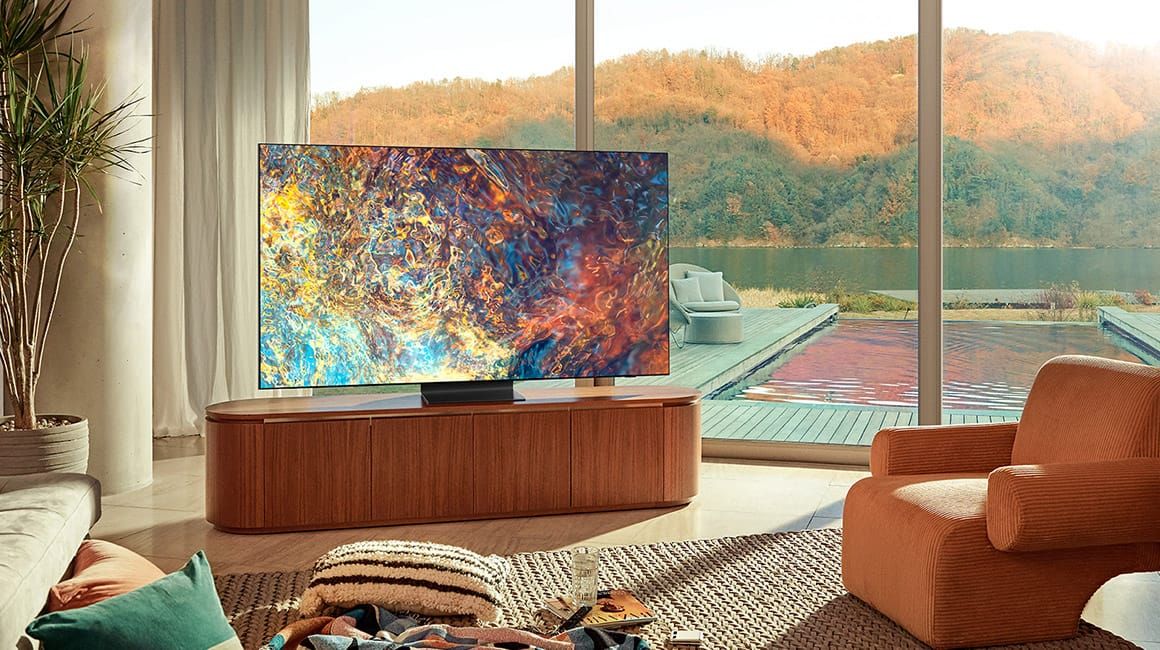
If you've shopped for a TV lately, you've run into three terms that sound like variations of the same thing: OLED, QLED, and Mini-LED. They're not — they're three different ways of building a picture, and the naming is deliberately confusing. Here's what each one actually is and how to pick.
What Is OLED?
OLED stands for organic light-emitting diode. Every pixel makes its own light — there's no backlight. When a pixel needs to be black, it turns off completely, which is why OLED has perfect blacks and effectively infinite contrast. Viewing angles are excellent too.
The trade-offs are real. OLED panels can't get as bright as LCD-based TVs, so they work best away from direct sun. And because the organic material wears unevenly, static elements — news tickers, game HUDs — can cause burn-in over time. Modern sets fight this with pixel shifting and logo dimming, so it's rare in normal viewing, but it matters if the TV shows the same static image for hours daily.
Who makes them: LG dominates with the C-series (the value sweet spot) and G-series (the brighter flagship); Samsung sells QD-OLED sets like the S95F; Sony builds its Bravia OLEDs on LG panels. In 2026 the LG C5 (a 2025 model) remains the value pick — the 55-inch runs around $1,100 on Amazon — with the new C6 carrying the latest generation.
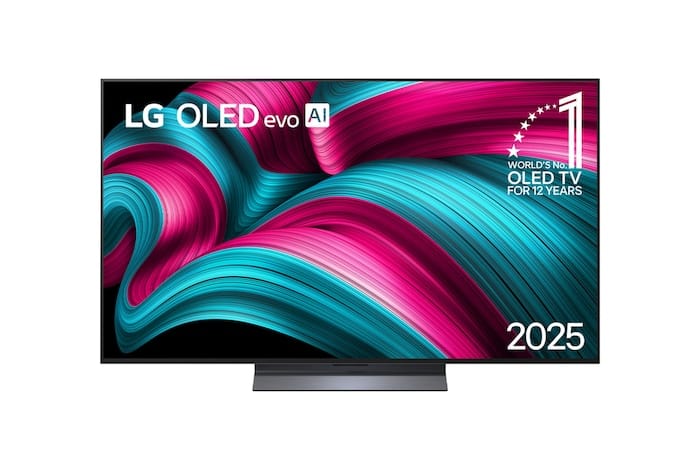
Photo: LG (press kit)
Example: LG 55" C5 OLED evo 4K Smart TV — around $1,160 on Amazon (Amazon currently shows "see price in cart")
What Is QLED?
QLED is Samsung's brand name, and it stands for quantum-dot LED. Despite the one-letter difference from OLED, it's a completely different technology: a QLED TV is an LCD TV. An LED backlight shines through a liquid-crystal panel, and a quantum-dot film in between boosts color richness and efficiency.
That construction decides everything. Because the backlight is always partly on, blacks look dark gray rather than truly black, and contrast can't touch OLED. Viewing angles are fair, not great. But QLEDs get very bright — the natural choice for sunny living rooms — and there's zero burn-in risk.
Naming note: Samsung's premium "Neo QLED" line (the QN-series, like the QN90F) pairs quantum dots with a Mini-LED backlight (below). Standard QLED sets (the Q-series) use a conventional LED backlight and cost less.
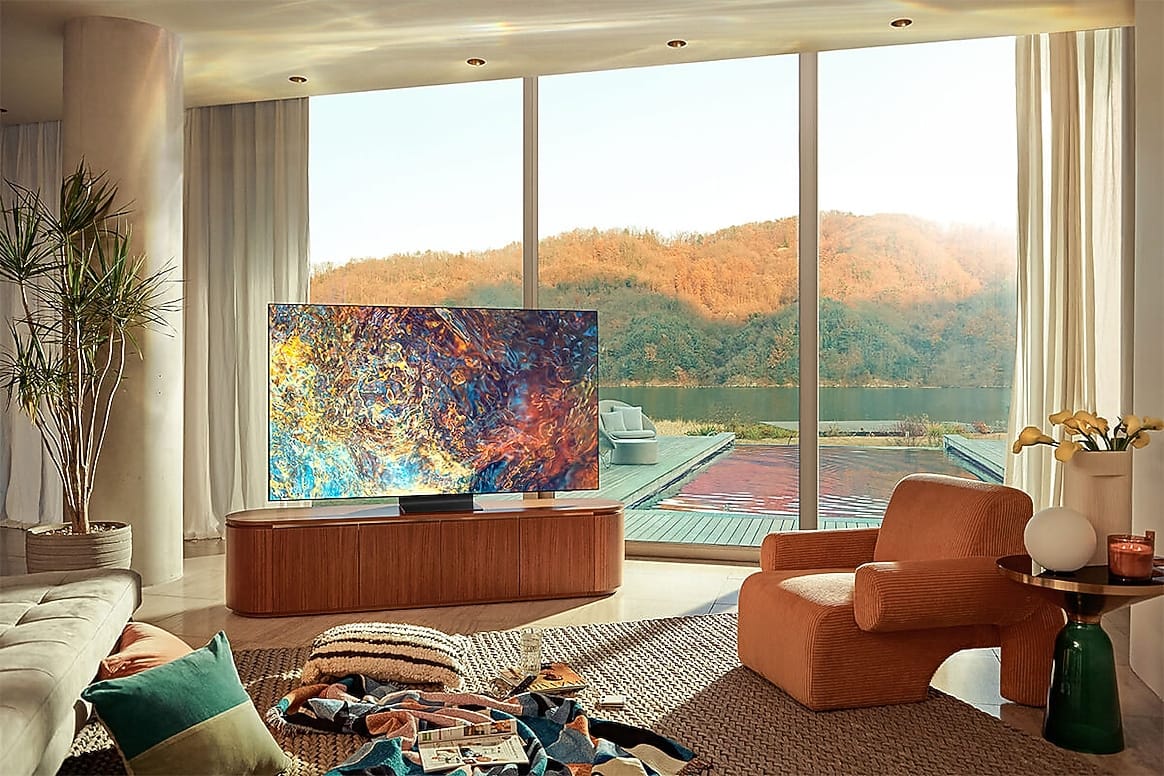
Photo: Samsung (press kit)
Example: Samsung 55" QN90F Neo QLED 4K Smart TV — around $1,400 on Amazon
What Is Mini-LED?
Mini-LED isn't a third display type — it's a much better backlight for LCD TVs. Instead of dozens of LEDs, a Mini-LED set uses thousands of tiny LEDs in hundreds or thousands of local dimming zones that brighten and darken independently. The result is the closest an LCD has come to OLED-level blacks, with peak brightness (the TCL QM7K advertises 3,000 nits) that leaves even the best OLEDs behind.
The compromise is blooming: a bright object on a dark background can glow slightly into the surrounding zone, like a halo around subtitles in a night scene. Viewing angles are similar to QLED's — good head-on, weaker from the side.
Key insight: Mini-LED and QLED aren't competitors. TCL and Hisense pair Mini-LED backlights with quantum dots (TCL calls it "QD-Mini LED"), and Samsung's Neo QLED is the same idea. Mini-LED is the engine; quantum dots are the paint.
Who makes them: TCL (QM6K, QM7K, flagship QM8K) and Hisense (U7 and U8 series) are the Mini-LED value kings in 2026, with Samsung's Neo QLED at the premium end. The 55-inch TCL QM7K — QD-Mini LED with 144Hz gaming support — runs under $600 on Amazon, the best picture-per-dollar in TVs right now.
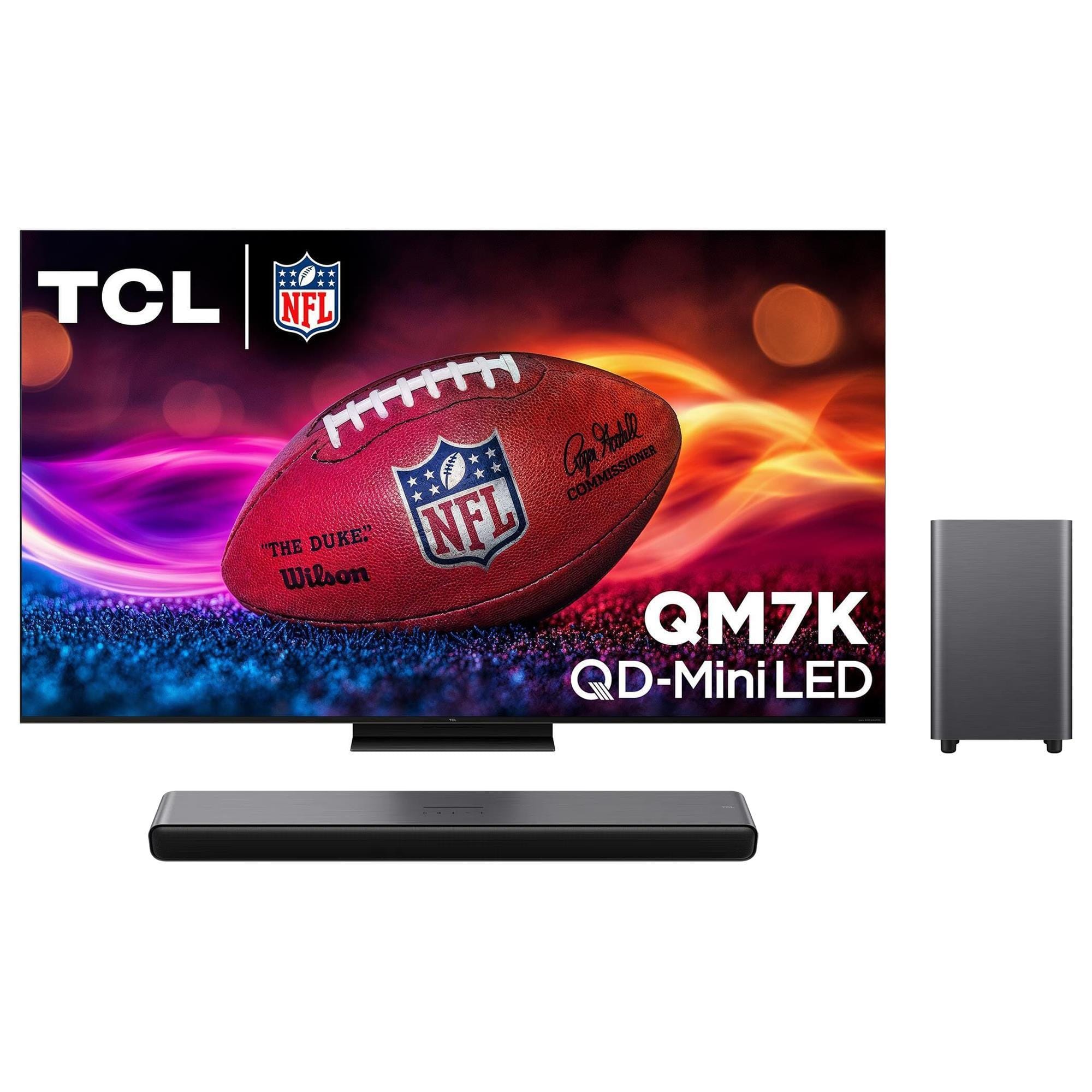
Photo: TCL (press kit)
Example: TCL 55" QM7K QD-Mini LED 4K Smart TV — under $600 on Amazon
OLED vs QLED vs Mini-LED at a Glance
| OLED | QLED | Mini-LED | |
|---|---|---|---|
| How it works | Each pixel makes its own light | LED backlight + LCD + quantum dots | Thousands of tiny LEDs in dimming zones |
| Black levels | Perfect — pixels turn fully off | Good, but blacks look dark gray | Near-OLED, with slight blooming |
| Peak brightness | Moderate to high | Very high | Very high |
| Viewing angles | Excellent | Fair to good | Fair to good |
| Burn-in risk | Yes, low with normal viewing | No | No |
| Best room | Dark or dim | Bright and sunny | Any |
| Typical 55" price | ~$1,100+ | ~$800–$1,500 | ~$550–$1,000 |
Which Should You Buy?
Buy OLED if: you watch movies in a dark room and want the best picture quality at a sane price. Nothing else matches the contrast. Pick the LG C5 for value or the G6 if budget is no object.
Buy QLED if: your TV lives in a bright room, or the screen shows the same channel all day. Samsung's Neo QLED line is the one to look at — QLED brightness with Mini-LED contrast behind it.
Buy Mini-LED if: you want the most picture for your money. Gamers get a lot here: high refresh rates, great HDR brightness, no burn-in during marathon sessions. The TCL QM7K is the default pick for value hunters.
It barely matters if: you're buying a smaller bedroom TV for casual streaming. Any decent 55-inch 4K set from these families looks great. Save the agonizing for the main living-room TV.
Bottom Line
OLED wins on pure picture quality, QLED wins on brightness and peace of mind, and Mini-LED wins on value — and the lines are blurring, since the best LCD TVs now combine quantum dots with Mini-LED backlights anyway. Dark room and movie lover: OLED. Bright room or all-day TV: QLED. Best bang for the buck: Mini-LED.