iPhone vs Android in 2026 — Honest Buying Guide
Every few years someone declares this debate settled. It isn't — but the terms have changed. In 2026 the iPhone-vs-Android choice is less about which is "better" and more about which set of trade-offs fits your life: price flexibility versus simplicity, openness versus polish, Google's AI versus Apple's privacy pitch. Here's the honest breakdown.
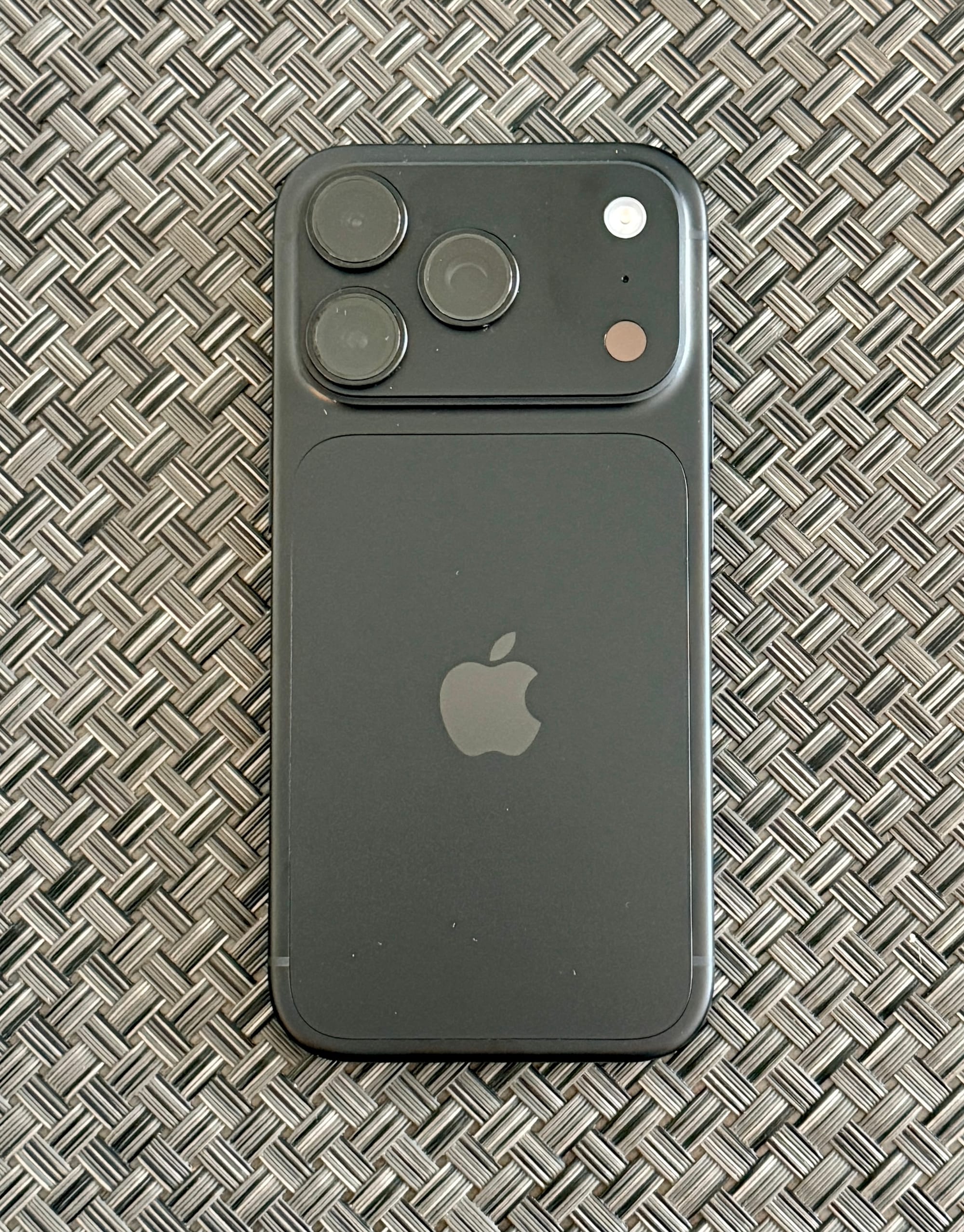
Photo: Wikimedia Commons (CC BY-SA 4.0)
The price reality
This is the simplest difference and the one that decides it for most people. Apple sells iPhones at Apple prices: the current iPhone 18 Pro starts at $1,199, and there is exactly one company making iPhones, so discounts are rare and shallow.
Android is an entire market, not a single product line. You can spend $1,399.99 on a Galaxy S26 Ultra — or $199.99 on a Galaxy A16 5G that handles everyday life just fine. Google, Samsung, Motorola, OnePlus, and Nothing all compete with each other, which means sales, trade-in deals, and carrier promotions are constant. If your budget is under $600, Android isn't just the better choice — it's the only choice with real options.
Bottom line: iPhone if you can comfortably spend $800+; Android if you want choice at every price.
Cameras: both excellent, different strengths
For still photos in good light, a $1,099 Pixel 11 Pro and a $1,199 iPhone 18 Pro will both take pictures you'll be happy with — the days of one side being obviously worse are over. The differences are in philosophy:
- Google Pixel (Android): the best point-and-shoot camera. Computational photography does the work — night shots, tricky lighting, and moving kids come out great with zero effort.
- iPhone: the best video camera on any phone, period. If you shoot lots of video, this alone can decide it. The iPhone 18 Pro also adds a mechanical variable-aperture lens for photography enthusiasts.
- Samsung (Android): the best zoom. No iPhone gets as close to distant subjects as the Galaxy S26 Ultra.
Bottom line: photo-first stills shooters should look at Pixel; video shooters should look at iPhone; zoom lovers should look at Samsung.
Software updates and longevity
This used to be Apple's uncontested win. Not anymore. Google and Samsung now promise seven years of OS and security updates on their flagships — matching or exceeding Apple's typical support window (Apple doesn't publish a fixed number, but iPhones generally get 5–6 years of major iOS updates).
The catch is at the budget end: a $200 Android phone might get two or three years of updates, while even Apple's cheapest current iPhone gets the full treatment. And Apple's updates arrive for every supported iPhone on day one, while Android updates still roll out at each manufacturer's pace.
Bottom line: at flagship prices, update support is now a tie. At budget prices, iPhone wins — if you can afford the entry fee.
Ecosystem lock-in: the real switching cost
Here's the honest part most guides skip: the hardest part of switching isn't learning a new interface — it's your stuff.
If you're on iPhone: iMessage and FaceTime are the big ones. Apple now supports RCS messaging (see our Pixel roundup), so Android-to-iPhone texts finally include high-quality photos and read receipts — the blue-bubble gap has narrowed but not closed. AirDrop, Apple Watch, and AirPods all work best (or only) with iPhone.
If you're on Android: Google's ecosystem is deliberately cross-platform — Gmail, Google Photos, Google Drive, and Chrome work fine on iPhone. Switching from Android to iPhone is genuinely easier than the reverse, because Google follows you but Apple mostly doesn't.
Bottom line: happy iPhone users with an Apple Watch and AirPods have the most to lose by switching. Android users can switch to iPhone with minimal pain.
AI features: Google leads, Apple promises privacy
AI is the main battleground in 2026. Google's Gemini is deeply woven into Pixel phones — call screening, live translation, photo editing, and an assistant that can actually do things. Samsung has its own Galaxy AI suite with genuinely useful features like live call translation.
Apple's approach is Apple Intelligence with an emphasis on on-device processing — your data stays on your phone rather than going to the cloud. It's the privacy-conscious choice, but in raw capability and breadth of features, Google is ahead.
Bottom line: if AI features excite you, Android (especially Pixel) is ahead. If AI makes you nervous about your data, Apple's on-device approach will appeal more.
Customization vs simplicity
Android lets you change nearly everything: default apps, home screen launchers, icon packs, side-loaded apps, split-screen multitasking. iPhone in 2026 is more customizable than it used to be, but it's still Apple's way or the highway — one app store (in the US), one set of design rules, everything sandboxed.
Neither is objectively better. Some people find Android's freedom empowering; others find it overwhelming. Some find iOS's consistency calming; others find it constraining. Know which person you are.
Who should buy which
Buy an iPhone if: you shoot lots of video, you own an Apple Watch or AirPods, your family lives in iMessage/FaceTime, you keep phones for 5+ years and want day-one updates, or you just want the simplest premium experience.
Buy Android if: your budget is under $600, you want the best still-photo camera (Pixel), the best zoom (Samsung), or a foldable (only Android has them), you value customization and choice, or you want the most advanced AI features.
The unsexy truth: both are excellent in 2026, and you'll be happy with either flagship. The people who regret their choice are the ones who bought the wrong one for their budget or their ecosystem — not the ones who picked the "wrong" operating system.