Matter, Thread and Zigbee: Smart Home Standards in Plain English
Shop for any smart bulb, lock, or sensor today and you'll see the same three words on the box: Matter, Thread, Zigbee. They sound like interchangeable tech buzzwords, but they describe different pieces of the smart home puzzle. Here's what each one actually does, how they fit together, and what to look for when you buy devices in 2026.
Why smart homes got so messy
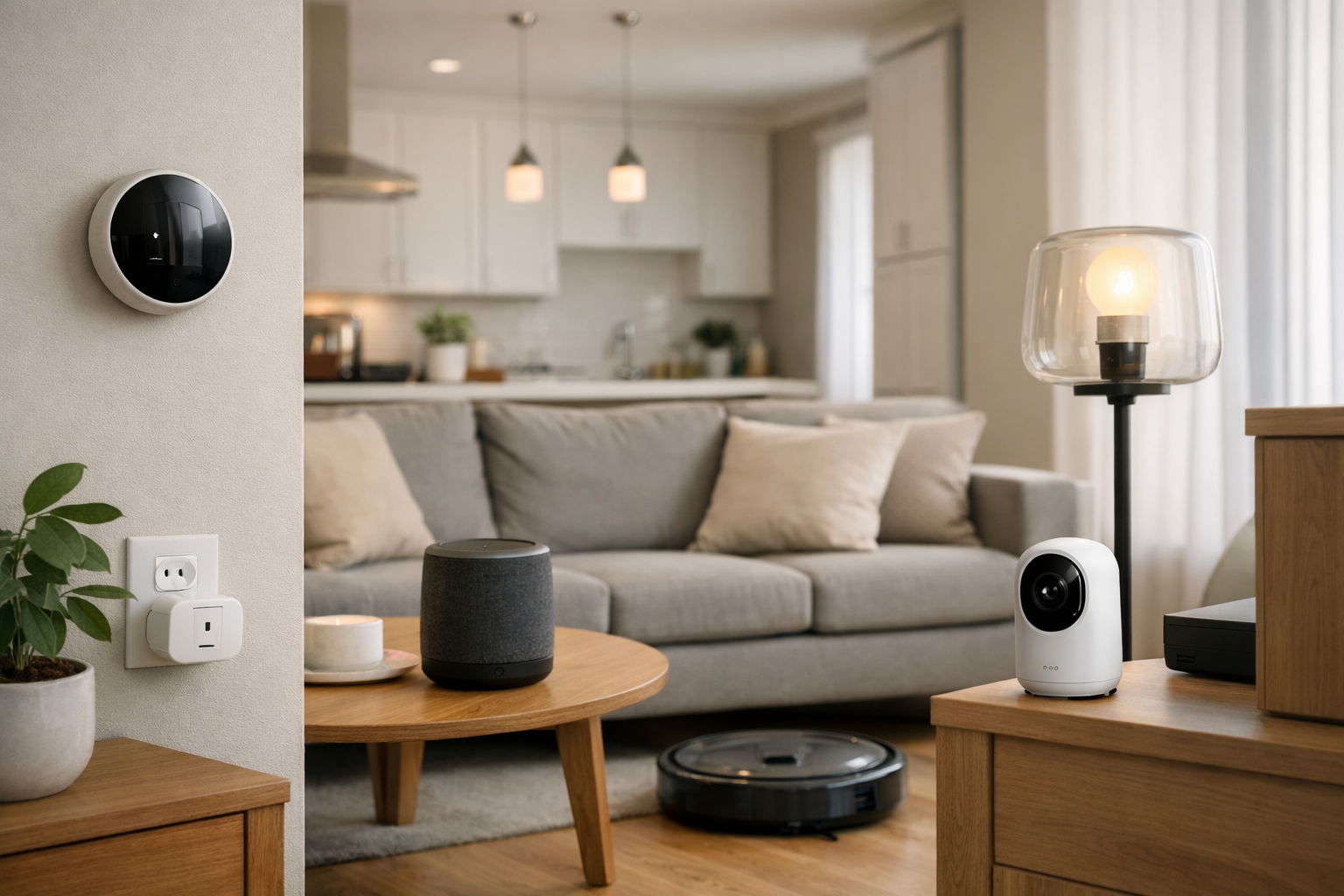
For years, the smart home's biggest problem wasn't the gadgets — it was that gadgets didn't talk to each other. Every brand built its own private system: a Philips Hue bulb spoke Hue's language, a Ring camera spoke Ring's language, and a Google speaker couldn't control either without the companies building special one-off integrations.
That meant buyers had to plan purchases around "ecosystems" (the collection of apps and devices from one brand) instead of just buying the best product. Switch from Alexa to Google Home, and half your house might stop working. The three standards below are the industry's answer to that mess.
What Matter is: a common language
Matter is a shared language that smart home devices use to talk to each other. Think of it like this: if every device speaks its own language, they can't cooperate. Matter is the agreement that they'll all speak one common language for basic commands — turn on, turn off, dim, lock, unlock, read the temperature.
Matter is backed by the Connectivity Standards Alliance — an industry group whose members include Apple, Google, Amazon, Samsung, and most major smart home brands. That backing matters (no pun intended): because the big players signed on, a Matter-certified device can work with Apple's Home app, Google Home, Alexa, and Samsung SmartThings at the same time. You don't have to pick one ecosystem when you buy the device.
A few things Matter is not: it isn't a type of wireless signal, it isn't an app, and it doesn't mean a device will do everything. Matter covers the basics across device types — lights, locks, thermostats, plugs, sensors, and more — but a device can still have extra features that only work in its own brand's app. Still, the basics work everywhere, and that alone fixes the biggest headache.
What Thread is: the wireless mesh that carries the language
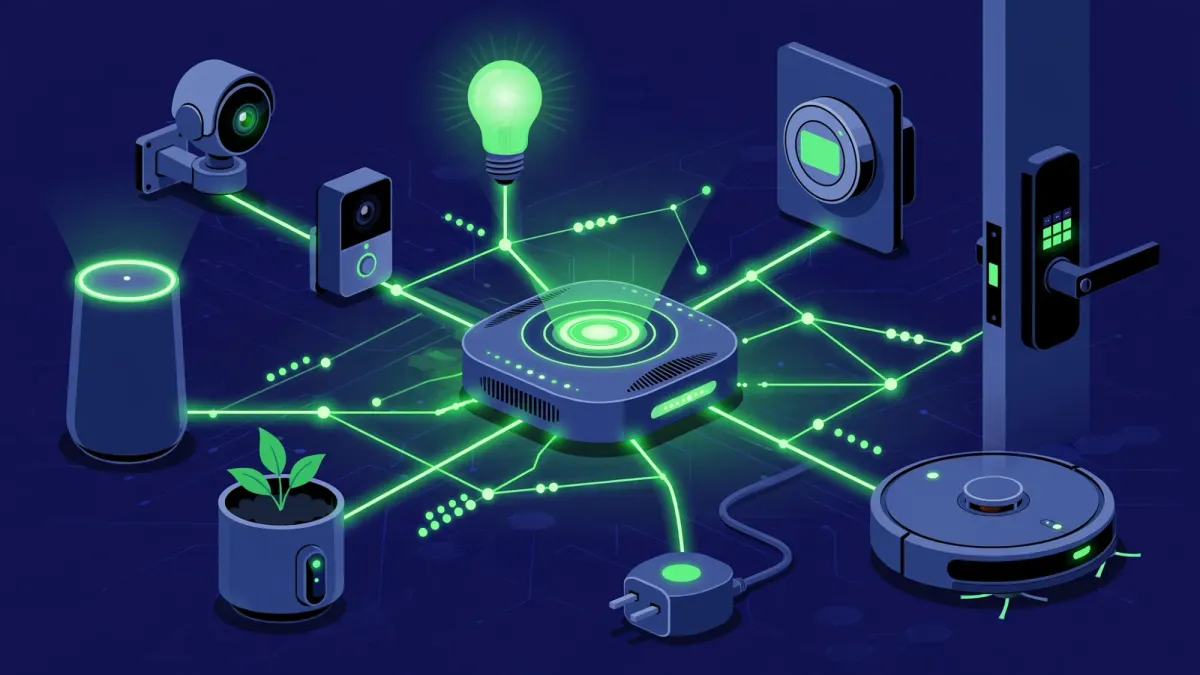
If Matter is the language, Thread is one of the roads the language travels on. Thread is a type of wireless connection — a mesh network, which means devices pass messages along to each other instead of each one connecting straight to your router. That's useful because it extends range (a sensor in the garage can relay through the sensor in the hallway) and keeps working even if one device goes offline.
Thread is designed for small, battery-powered devices like door sensors, motion sensors, and smart locks — the gadgets where Wi-Fi would drain the battery too fast. It's fast, low-power, and very reliable.
To connect Thread devices to your Wi-Fi network and the internet, you need a border router — a device that bridges the Thread mesh and your home network. The good news: you may already own one. Apple TV 4K, HomePod mini, many Echo devices, Google Nest Hub, and some Samsung SmartThings hubs all act as Thread border routers. If you have one of those, Thread devices just work.
So when a box says "Matter over Thread," it means: the device speaks the Matter language, and it uses Thread wireless to carry it. Your border router handles the rest.
What Zigbee is: the older standard that paved the way
Zigbee is the older generation of smart home wireless. Like Thread, it's a low-power mesh network — it was doing mesh networking for battery-powered devices long before Thread existed. Millions of Zigbee devices are already in homes: many Philips Hue bulbs, IKEA smart lights, Aqara sensors, and countless other gadgets use it.
Here's the catch: Zigbee devices don't speak Matter natively. They need a hub (a small box that plugs into your router and translates between Zigbee and your home network) and often a brand-specific app. Some manufacturers have updated their hubs to also speak Matter, which lets older Zigbee devices appear in Matter-compatible apps — but the Zigbee devices themselves don't change.
In short: Zigbee was the standard that proved mesh networks work in homes. Thread is its modern successor, and Matter is the common language that runs on top of both.
How the three fit together
Here's the simple mental model:
- Matter is the language — the commands devices share.
- Thread is the wireless road built for small battery devices — and it's the road Matter prefers for them.
- Zigbee is the older wireless road — still fine, still widely used, but devices on it need a hub and don't speak Matter directly.
A smart bulb might use Matter over Wi-Fi (a direct road to your router — fine for plugged-in devices). A door sensor might use Matter over Thread (battery-friendly, through your border router). An older IKEA bulb might use Zigbee (needs the IKEA hub, which may itself talk Matter to your apps). They can all end up in the same app, working together.
What to look for on the box in 2026
When you're shopping, these are the marks that actually matter:
- The Matter logo (a three-lobed shape) means the device works with all the major platforms at once. This is the single most future-proof thing on the box.
- "Thread" or "Thread border router required" means it's a battery-friendly device that needs a border router. Check that you own a compatible one — most recent Apple TV, HomePod mini, Echo, or Nest Hub models qualify — or plan to buy one.
- "Zigbee" means it needs that brand's hub. That's fine if you already own the hub, but if you're starting fresh, prefer Matter devices instead.
- "Matter over Wi-Fi" means it connects directly to your router — no hub or border router needed. Simplest option for plugged-in devices like bulbs and plugs.
One honest warning: don't buy a new hub in 2026 unless you already own that brand's devices. The whole point of Matter is that hubs are becoming optional.
Should you replace your old gear?
Probably not — at least, not yet. If your current devices work and you're happy with them, there's no reason to rip anything out. Matter doesn't make your old devices stop working.
Replace strategically: when an old device dies, or when you're adding a new category (your first smart lock, your first sensors), choose Matter devices. They'll work with whatever platform you use today and whatever you switch to tomorrow. And if you own a Zigbee ecosystem like Philips Hue, check whether the manufacturer offers a Matter-compatible hub update — many do, and it's the cheapest upgrade path.
Bottom line
Matter, Thread, and Zigbee aren't competitors — they're layers that solve different parts of the same problem. Matter is the common language, Thread is the modern wireless network that carries it to battery devices, and Zigbee is the older network that still works fine behind a hub. In 2026, the shopping rule is simple: buy Matter devices when you can, make sure you have a Thread border router if you buy Thread devices, and don't buy new Zigbee hubs unless you're already invested in that ecosystem. Your future self — the one who switches phone platforms or voice assistants — will thank you.