
What Is Ultra-Wideband (UWB)? Explained in Plain English (2026)
UWB is the radio that lets your phone point an arrow straight at your lost keys. How it works, why it's hard to fool, and where you already use it.

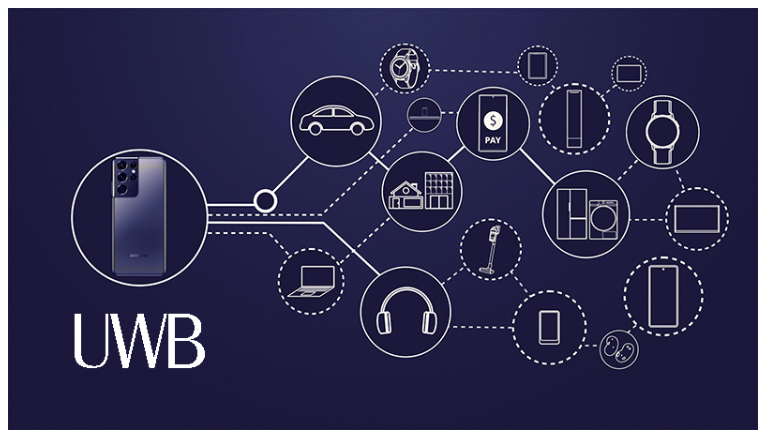
Your phone already knows the difference between "your keys are somewhere in this house" and "your keys are four feet ahead, slightly to your left." The second, much more useful answer comes from a radio most people have never heard of: Ultra-Wideband, or UWB. Here is what it is, in plain English.
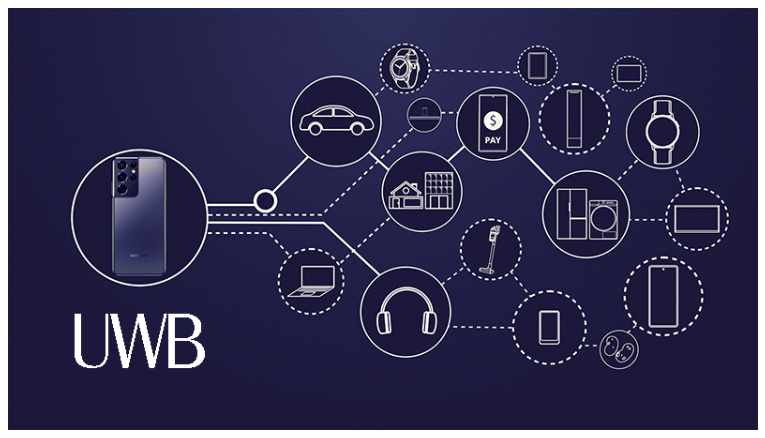
What UWB is
Ultra-Wideband is a short-range radio built to measure exactly how far apart two devices are — and which direction one is from the other. Instead of guessing distance from signal strength the way Bluetooth does, UWB sends extremely short, precisely timed radio pulses and measures how long they take to travel between devices. Radio waves move at a fixed speed, so that timing converts directly into distance — accurate to roughly 10–30 centimeters. With more than one antenna, the phone can also work out the angle, which is how it draws an arrow pointing at the thing you lost.
The "wideband" part is literal: UWB spreads its pulses across a very wide slice of radio spectrum (roughly 3.1 to 10.6 GHz) at very low power. Those short, spread-out pulses are what make the timing so precise — and why UWB works over short ranges, typically a few meters indoors and up to a few dozen meters with a clear line of sight.
Why it matters
Bluetooth can tell your phone that something is "nearby." That is genuinely useful for finding things across a city — it is how tracker networks work — but it cannot reliably tell a couch cushion from a kitchen drawer. UWB answers the last-ten-feet question: not just near, but how near, and which way.
That precision also makes UWB hard to fool. A car key system using UWB can confirm your phone is truly standing at the door, not relaying a signal from across the street — a trick that has been used to steal cars with weaker keyless systems. Distance you can trust turns out to be a security feature, not just a convenience.
Where you already use it
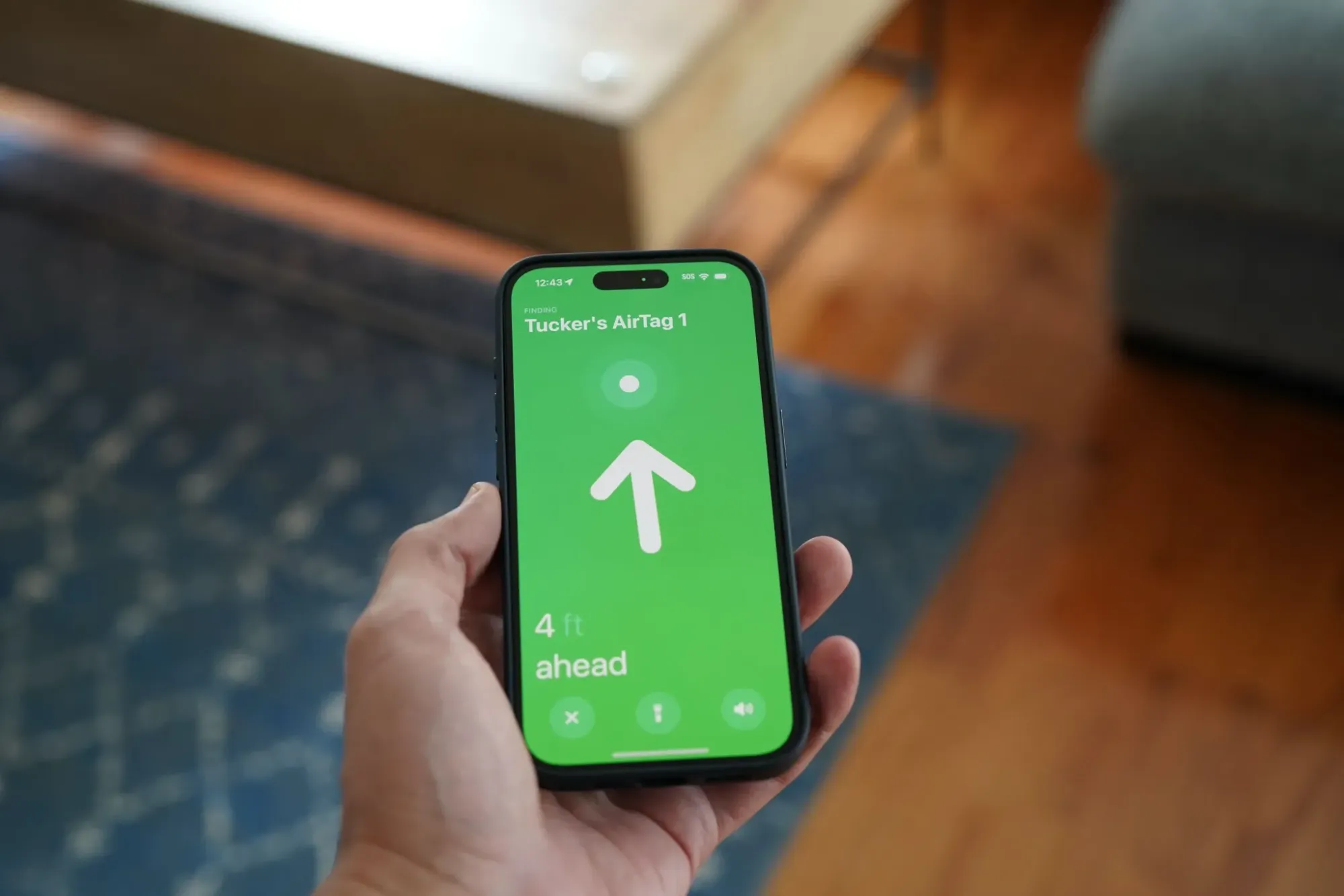
- Finding lost items. Apple's Precision Finding for AirTag and Samsung's finding feature for Galaxy SmartTag trackers use UWB to show live distance and an on-screen arrow once you are close. Bluetooth handles the far-away search; UWB takes over for the final steps.
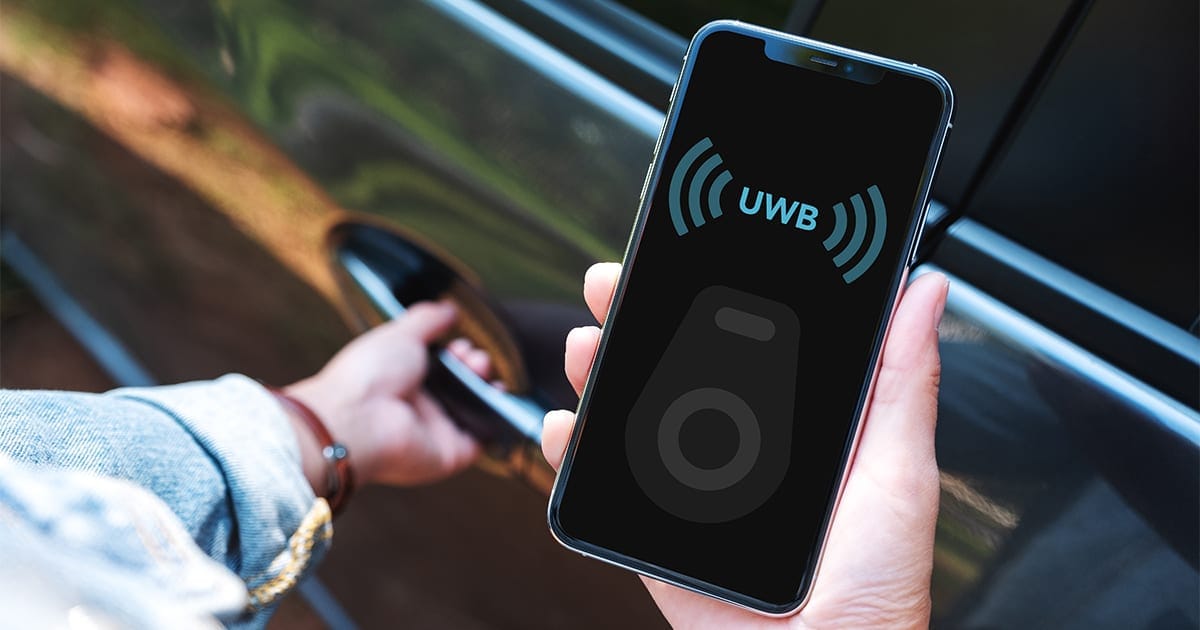
- Digital car keys. A growing list of cars can unlock and start with your phone in your pocket. UWB verifies you are actually at the car before it unlocks, and NFC is kept as a backup if your phone battery dies.
- Tap-to-share and nearby transfers. Some phones use UWB to figure out which device you are pointing at, so sharing a file goes to the right person in a crowded room.
Does your phone have it?
UWB is a chip, not a software update, so your phone either has the hardware or it never will. Apple's U1 and later chips are in iPhone 11 and newer (excluding the budget "e" models), Samsung includes UWB in its higher-end Galaxy S and Z models, and Google includes it in Pro Pixel models. Base models often leave it out to cut cost — if Precision Finding-style features matter to you, check the spec sheet for "Ultra-Wideband" before you buy, because there is no way to add it later.
Bottom line
UWB is the radio that tells your devices exactly where things are, not just that they exist. It measures distance by timing tiny radio pulses, gets it right to within centimeters, and already powers the best parts of item finding and digital car keys. You will rarely see its name — but the next time your phone points an arrow straight at your lost keys, that is UWB working.
Member discussion