
What Is a Smart Home Hub? Explained in Plain English
A smart home hub is the control point that lets your smart devices work together as one system. Here's what it does, how it differs from a speaker or router, and who actually needs one.

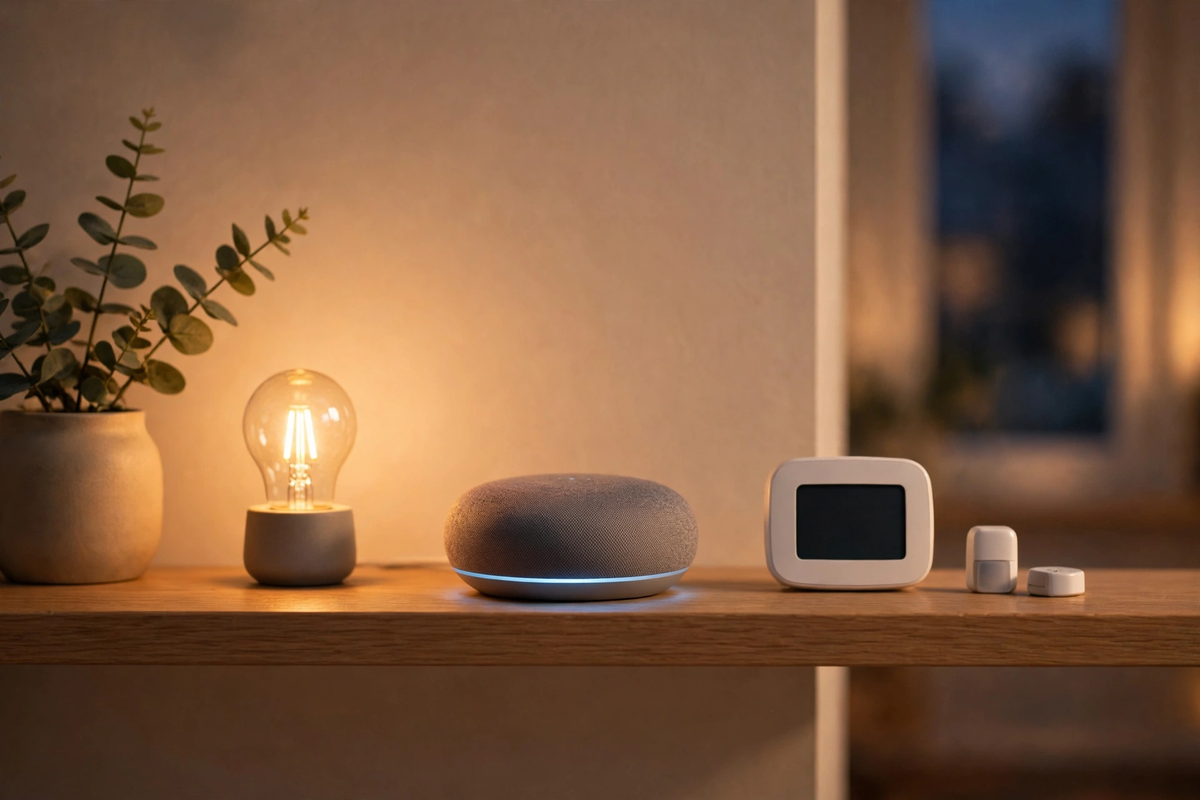
A smart home hub is the central control point that lets your smart devices work together as one system, instead of as separate gadgets each with its own app.
With a hub, a smart bulb, lock, and thermostat can follow the same rules — for example, locking the door and turning off the lights when you leave.
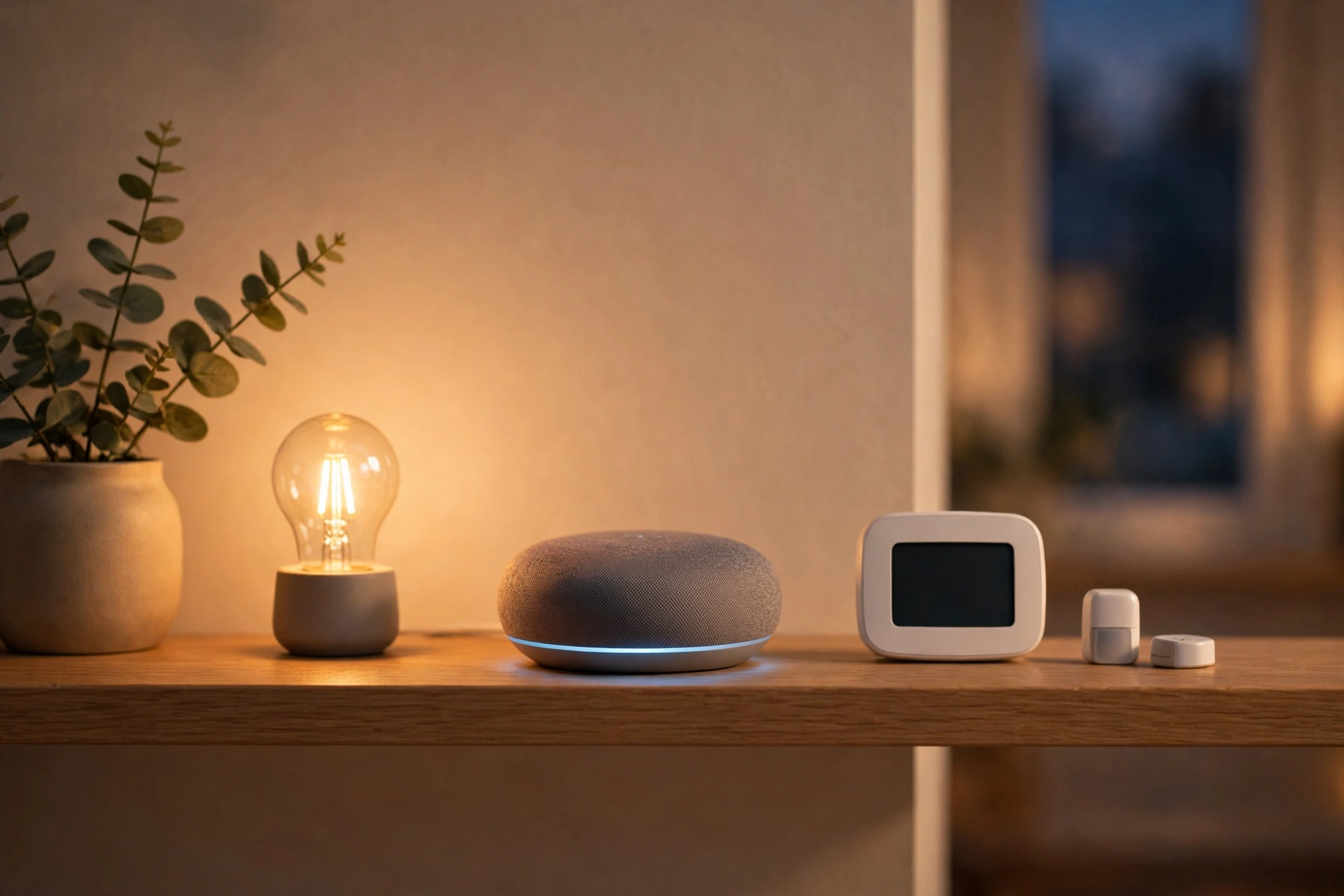
What a smart home hub does
A hub has three main jobs. First, it connects devices that speak different wireless languages. Not every smart device uses Wi-Fi; many use low-power radios instead, and a hub translates between them.
Second, it stores and runs automations — the "when this happens, do that" rules.
Third, it gives you one place to control everything: one app, instead of jumping between five manufacturer apps. Some hubs are dedicated boxes; others are built into a speaker, display, or streaming box you already own.
Hub vs. smart speaker vs. router vs. bridge
These terms get mixed up because one product can do more than one of these jobs.
- A smart speaker is mainly a way to give voice commands. Some speakers also contain hub functions, but not all do.
- A Wi-Fi router connects your home network to the internet. It is not automatically a smart home controller.
- A bridge connects one manufacturer's family of devices to a larger platform. It serves its own brand, while a hub coordinates many brands.
- A hub is the control point. Its defining job is managing devices, rooms, scenes, and automations across brands.
In short: the router provides the network, the speaker provides a voice interface, the bridge connects one brand, and the hub coordinates the whole setup.
The main protocols, in plain English
Smart devices communicate using different sets of rules, called protocols. Sharing a Wi-Fi connection does not guarantee two devices understand each other.
Matter is a shared application standard from the Connectivity Standards Alliance, backed by Apple, Google, Amazon, and Samsung. It is not a radio itself — it is the common language devices use once connected, running over Wi-Fi, Thread, or Ethernet.
Thread is a low-power mesh network at 2.4 GHz. It is one of the networks Matter can run on, and Thread devices need a Thread border router to connect the mesh to your home network.
Zigbee is an older low-power mesh protocol, also at 2.4 GHz. Mains-powered Zigbee devices relay messages for each other, extending range. It is widely used for sensors, bulbs, and plugs, and it needs a Zigbee coordinator.
Z-Wave is another low-power mesh protocol, but it uses sub-GHz frequencies — 908.42 MHz in the United States — which helps it avoid interference with Wi-Fi and Zigbee.
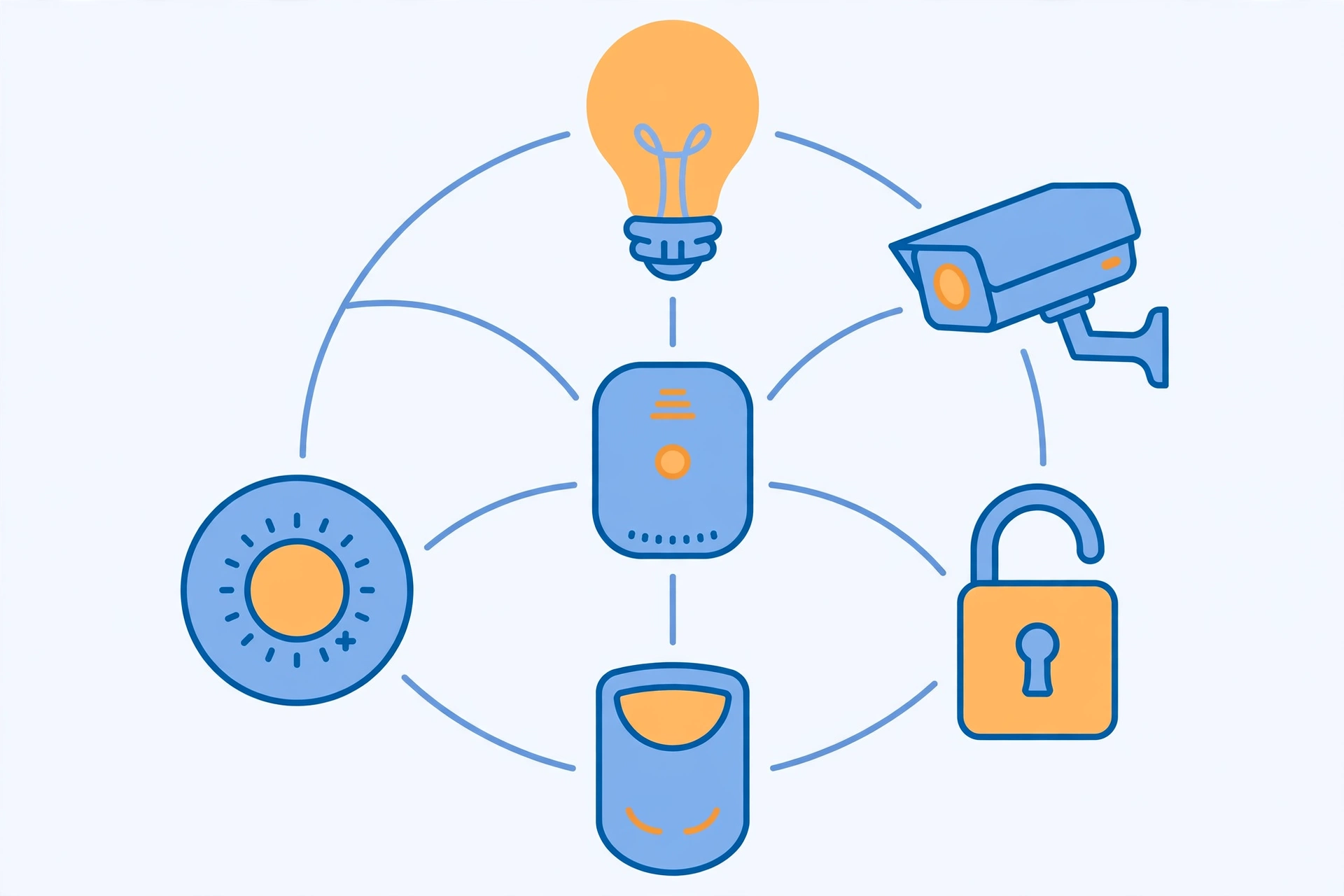
Before buying a device, check which protocol it uses and whether your hub supports it.
Examples of hubs
The right hub usually follows the platform your household already uses. Amazon's Echo (4th generation) includes a Zigbee hub, and the Echo Hub adds Thread support. Google's Nest Hub (2nd generation) supports Matter and includes a Thread border router. Apple's HomePod mini acts as a Thread border router, and an Apple TV 4K can serve as the home hub for an Apple household. Samsung's SmartThings Station supports Matter, Thread, and Zigbee. Home Assistant is open-source software that runs on your own hardware — the most flexible option, but it takes more setup.
No single hub combines every protocol automatically, so check the exact model's compatibility list before buying.
Do you actually need one?
You probably need a hub if you have devices from several brands, you use Zigbee, Z-Wave, or Thread devices, or you want one app instead of several.
You can probably skip a dedicated hub if you only have one or two Wi-Fi devices, they all live in the same app already, and you do not plan to add sensors, locks, or devices from other brands.
The simplest test is to count the apps. If controlling your home means opening three or four different apps, a hub is likely to make life easier.


Member discussion